
Panama City Area: Living Guide (2025)
← Back to Florida Panhandle Overview
Panama City Area Overview
The Panama City area sits along St. Andrew Bay and the Gulf of Mexico. It functions as a working coastal city shaped by a large military presence, healthcare, and service employment rather than by a diversified corporate economy.
This is not a resort-first market, even though tourism plays a role. Most residents live full-time, commute locally, and organize daily life around schools and neighborhood services.
Growth here has been uneven, with parts of the area rebuilt or reshaped after Hurricane Michael. Housing patterns reflect that recovery.
What Daily Life Is Like
Daily life in the Panama City area is practical and spread out. Most errands require driving. Grocery stores, schools, medical offices, and big-box retail line corridors like Highway 77, US-231, and 23rd Street. Walkability exists in small pockets, but it is not the norm.
Weekdays follow work and school schedules. Military shifts and healthcare jobs set the rhythm of traffic and lifestyle. Downtown Panama City sees activity around offices and the waterfront, but it is not a daily hub for most residents.
Weekends often mean the beach, but there are also several excellent parks, including:
- Truesdell Park: Large playground, splash pad, sports fields. This is one of the most common after-school and weekend spots for families who live nearby.
- Frank Brown Park: Heavily used for youth sports leagues (soccer, baseball, flag football). Families often spend multiple evenings a week here during the season.
- Cain Griffin Park: Smaller, neighborhood-scale park. The kind of place parents take kids for 30–45 minutes after dinner, not a whole afternoon.
- St. Andrews State Park: Locals use it for biking, calm-water swimming, and short beach visits with kids, especially on weekdays. This is not just a tourist park for residents.
Worklife and Employment
Employment in the Panama City area is concentrated in terms of industry. Major employers and institutions include:
- Tyndall Air Force Base
- Bay Medical Sacred Heart
- Public schools and local government
- Construction, trades, and service industries tied to rebuilding and tourism
Military employment has a significant influence on housing demand and school enrollment. Many households plan moves around reassignment cycles.
Remote work exists but is less common than in Southwest Florida. There are coworking options, including "The Hive", but more limited professional networks.
Housing Snapshot
Housing in the Panama City area is more affordable than most coastal Florida markets, though prices vary widely. Common housing patterns include:
- Older single-family homes inland
- Newer subdivisions north of the bay
- Condos and townhomes closer to the beach
Storm exposure and insurance are part of the equation, especially in coastal and bay-adjacent neighborhoods. Rebuilt areas often have newer construction standards, which can help with insurance but raise purchase prices.
Buyers often trade location and views for lower long-term ownership costs.
Schools
The area is served by Bay District Schools, which scores a "B+" rating on niche.com with a very high ranking for College Prep.
School quality varies by neighborhood, and families typically choose housing based on specific zones rather than district reputation alone. Commonly referenced schools include:
Charter schools play a larger role here than in some other Panhandle cities, especially for military families.
Who the Panama City Area Works For
- Military families
- Healthcare and service workers
- Buyers seeking coastal access at lower prices
- Trades and construction professionals
- Residents comfortable with rebuilding cycles
Tradeoffs to Know
- Job diversity is limited outside core sectors
- Car-dependent daily life
- Hurricane risk and insurance volatility
- Seasonal congestion near the beach
- Fewer cultural amenities than larger metros
Areas and Pockets to Know
Panama City Proper / St Andrews
What it’s like: Older housing and working waterfront.
Who lives here: Long-term residents and commuters.
Why it matters: Proximity to hospitals and government offices.
Similar nearby areas: Parts of Pensacola outside East Hill.
Deep Dive: Panama City Proper / St Andrews --->
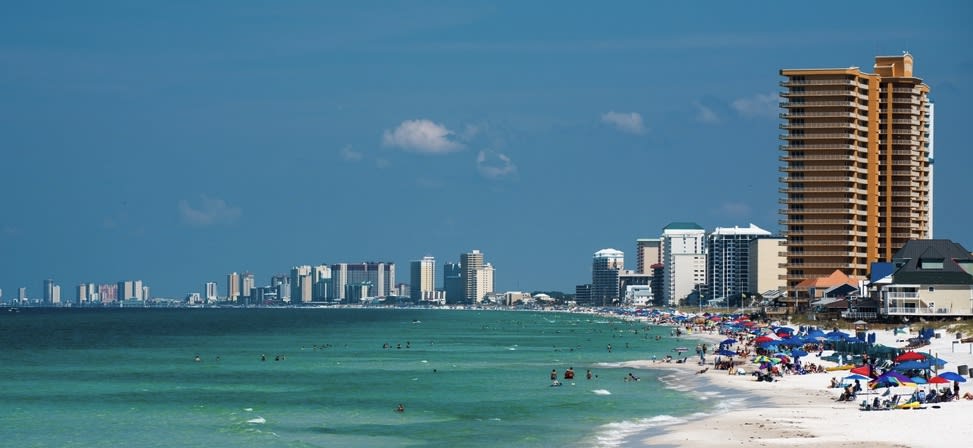
Panama City Beach
What it’s like: Visitor-heavy and seasonal.
Who lives here: Second-home owners and service workers.
Why it matters: Beach access and higher insurance exposure.
Similar nearby areas: Destin or Gulf Shores.
Deep Dive: Panama City Beach -->
Lynn Haven / North Bay Area
What it’s like: More suburban and family-oriented.
Who lives here: Families and military households.
Why it matters: Newer housing and school access.
Similar nearby areas: Northeast Pensacola suburbs.
Deep Dive: Lynn Haven / North Bay Area -->
Is the Panama City Area a Good Fit?
Panama City works best for people who want coastal living tied to stable anchor employment and are comfortable with rebuilding cycles and a smaller economic base.
It is a harder fit for buyers seeking career mobility, dense urban life, or minimal storm risk.
Comparing Panama City with Pensacola or Southwest Florida?
Save the areas you’re considering in LookyLOO so you can compare housing costs, schools, employment anchors, and storm exposure before deciding.