
Where to Live in the Columbus Metro Area (2025 Guide)
The Columbus Metro at a Glance
Columbus has quietly become one of the Midwest’s most livable and popular metros. It combines a growing creative culture and economic diversity in a pretty affordable package (although that is changing). With more than 2.1 million residents across Franklin, Delaware, and Licking Counties, it’s now the second-largest metro in Ohio and among the fastest-growing in the Midwest.
A strong job base, anchored by THE Ohio State University, Nationwide Insurance, and the region’s expanding tech corridor, draws steady in-migration from across the country. New developments like Intel’s semiconductor campus in nearby New Albany are reshaping the east side economy and driving housing growth.
Economic Landscape
Columbus’s economy is among the most diversified in the Midwest. Government, higher education, finance, healthcare, and logistics have long been steady employers, while tech, insurance, and manufacturing are expanding rapidly.
Major employers include:
• The Ohio State University and Wexner Medical Center (education and healthcare)
• Nationwide Insurance and Huntington Bancshares (financial services)
• Cardinal Health and Battelle Memorial Institute (biosciences)
• Intel (semiconductors – $20B facility underway in New Albany)
• Amazon and DHL (logistics/distribution)
This balanced mix has kept unemployment below national averages and attracted new residents from Chicago, New York, and the West Coast.
How the Metro Is Structured
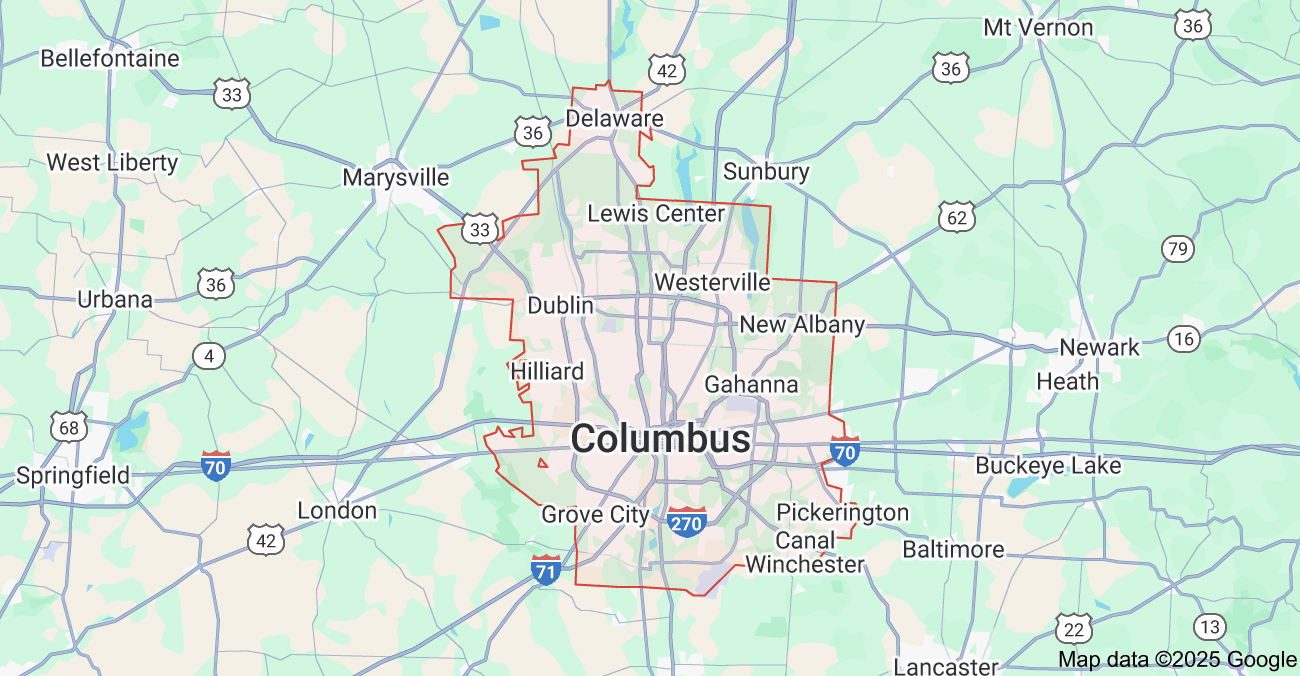
Columbus is one of the few Midwest metros without natural barriers like lakes or mountains, meaning it has expanded evenly in every direction. The Scioto and Olentangy Rivers shape the downtown area and flow north through some of the region’s oldest neighborhoods. Major highways like I-270 (the “Outerbelt”) circle the region, connecting suburban centers such as Dublin, Westerville, and Grove City.
Here’s how the area breaks down:
• Central Columbus (Downtown, Short North, German Village) – The urban heart with walkability, nightlife, and historic housing.
• Columbus North Suburbs (Worthington, Westerville, Polaris) – Established neighborhoods and strong school systems.
• Northwest Columbus Suburbs (Dublin, Hilliard, Powell) – Family-friendly communities with respected schools and newer master-planned housing.
• East & South Columbus Communities (New Albany, Gahanna, Grove City, Canal Winchester) – Fastest growth corridor with new housing and employers like Intel.
Columbus Metro Subregion Snapshots
Central Columbus
The Vibe:
Filled with urban energy and rooted in historic neighborhoods with strong arts and dining scenes.
Why It Works:
- Walkable access to restaurants, coffee shops, greenways, and nightlife
- Rock-steady economy with major employers like OSU and the state government.
Watch Out For:
- Higher rents and limited parking
- Occasional noise (it does have a massive University in-town)
Good Fit For:
Young professionals, creatives, graduate students, renters, and anyone who prefers to live close to urban amenities.
Neighborhoods to Explore:
– Downtown
– Short North
– German Village
– Italian Village
– Franklinton
Deep Dive: Central Columbus →
North Columbus Suburbs
The Vibe:
Established and leafy with long-standing neighborhoods, strong schools, and steady community life.
Why It Works:
Access to good public schools, mature housing stock, community parks, and consistent suburban stability.
Watch Out For:
Older homes may need updating, and drive times can increase during peak OSU and downtown commute windows.
Good Fit For:
Families, long-term planners, suburban professionals, and residents who want predictability and strong schools.
Neighborhoods to Explore:
– Worthington
– Westerville
– Polaris area
– Clintonville (often grouped with Central but functionally part of the northern corridor)
Deep Dive: Columbus North Suburbs→
Northwest Columbus Suburbs (Dublin, Hilliard, Powell)
The Vibe:
Modern suburban living with newer housing, well-planned neighborhoods, and active community centers.
Why It Works:
High-rated public schools, spacious neighborhoods, strong parks and trail systems, and proximity to major employers in Dublin and Upper Arlington.
Watch Out For:
Higher home prices compared to older suburbs, growing traffic around the Dublin Bridge Street District, and limited transit options.
Good Fit For:
Families, dual-income households, remote workers seeking space, and residents who prioritize school districts.
Neighborhoods to Explore:
– Dublin
– Hilliard
– Powell
– Plain City
– Upper Arlington (often seen as its own category but adjacent to the corridor)
Deep Dive: Northwest Suburbs →
East & South Columbus Communities
The Vibe:
Rapidly expanding with new construction, emerging commercial centers, and a growing tech and logistics workforce.
Why It Works:
More attainable home prices, new-build housing, expanding retail corridors, and proximity to the Intel semiconductor campus and Rickenbacker logistics hub.
Watch Out For:
Ongoing construction, uneven school performance across districts, and commute variability as development accelerates.
Good Fit For:
First-time buyers, Intel employees, suburban newcomers, and families seeking newer homes at accessible price points.
Neighborhoods to Explore:
– New Albany
– Gahanna
– Grove City
– Canal Winchester
– Pickerington
Deep Dive: East & South Communities →
TL;DR – Where to Live in the Columbus Metro
Subregion---------------The Vibe--------------------------Best For
Central Columbus--------Urban, creative, historic-----------Young professionals, OSU staff, creatives
North Suburbs-----------Established, leafy, school-centric--Families, long-term residents, suburbanites
Northwest Suburbs------Modern, planned, high-amenity----Families, dual-incomes, commuters
East/South Areas--------Expanding, affordable, growth-----1st-time buyers, Intel workers, suburbanites
FAQs About Columbus
Q: Is Columbus affordable compared to other major metros?
A: Yes. Housing costs remain below national averages, even with rising demand. Average home prices hover around $330,000 in 2025.
Q: What’s driving growth in Columbus?
A: Economic diversification and new tech investment, especially Intel’s $20B semiconductor project, are fueling population and job growth.
Q: Which suburbs have the best schools?
A: Dublin, New Albany, and Worthington consistently rank near the top for public school performance.
Q: Is Columbus walkable or car-dependent?
A: Most suburban areas are car-oriented, but the central core (Short North, German Village, and Downtown) is highly walkable and bike-friendly.
Q: How’s the weather in Columbus?
A: Winters are cold but manageable, summers are warm and humid, and spring/fall offer comfortable seasons for outdoor life.
Ready to Find Your Perfect Spot in the Columbus Metro?
Save your favorite cities and neighborhoods in a Movebook, or take the LookyLOO quiz to see which areas match your lifestyle best.
–––––––––––––––––––––––––––––––